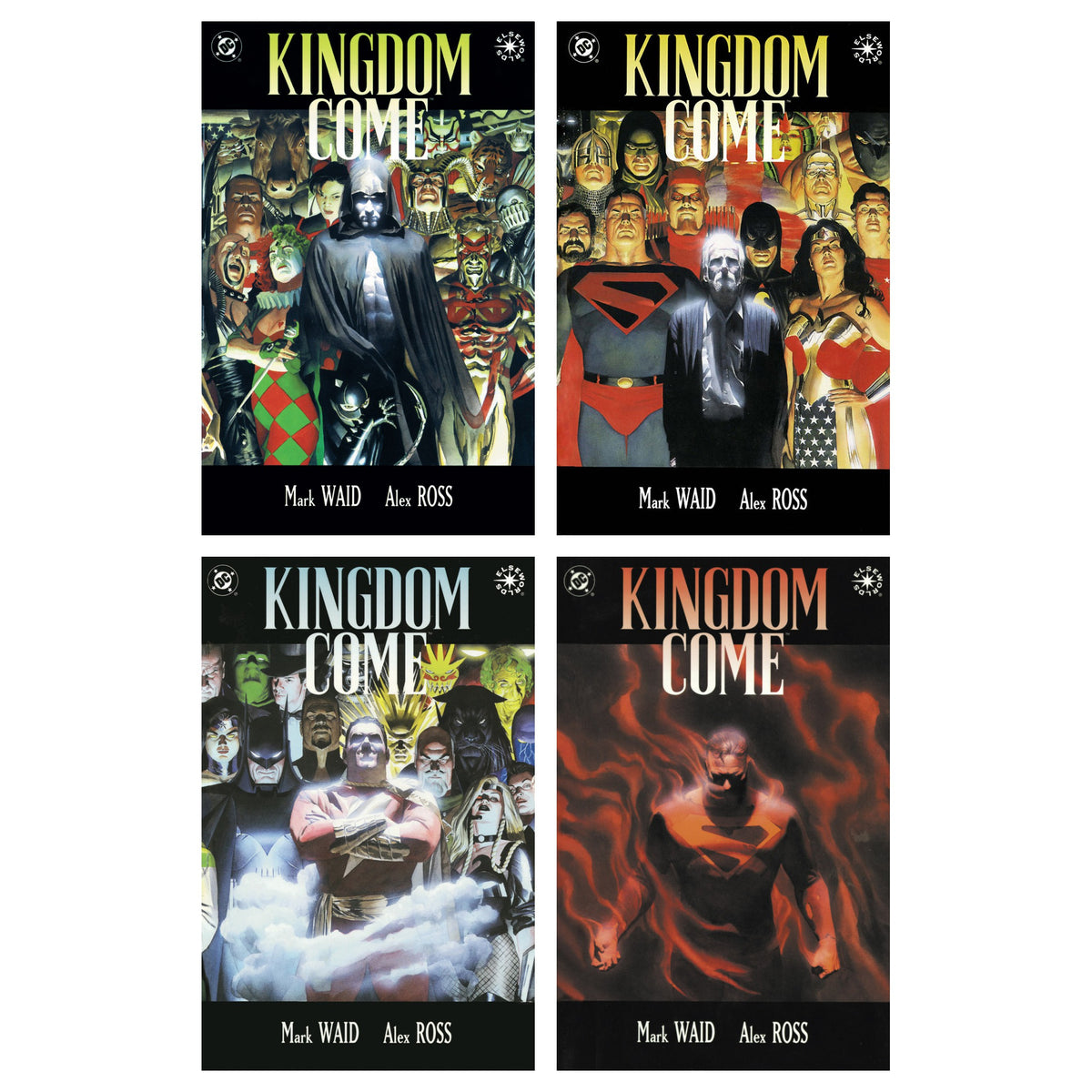
Kingdom Come #1-4 is
a masterpiece four-issue comic book miniseries published by DC Comics under its Elseworlds imprint from May to August 1996. Written by
Mark Waid and fully painted in breathtaking, photorealistic watercolor by
Alex Ross, this landmark series is widely considered one of the greatest, most influential graphic novel achievements in comic book history.
Plot Overview
-
The Setting: Set in a dystopian future DC Universe, traditional heroes like Superman, Wonder Woman, and Green Lantern have retired. In their absence, a reckless, hyper-violent new generation of metahumans fights without morals, causing massive collateral damage.
-
The Catalyst: A reckless battle led by the anti-hero Magog results in the complete nuclear destruction of Kansas, killing millions of innocent people.
-
The Return: Devastated by the tragedy, an aging Superman emerges from a decade-long self-imposed exile. He reforms the Justice League to force the rogue metahumans to adhere to traditional superhero ethics, locking up those who refuse in a specialized gulg.
-
The Fracture: Superman's rigid methods divide the remaining heroes. Batman, refusing to join Superman's authoritarian crusade, builds a third faction alongside human remnants and rogue elements. Meanwhile, Lex Luthor orchestrates a shadow coalition to exploit the growing superhero civil war to destroy them all.
-
The Climax: The tension explodes into a catastrophic battle at the superhuman Gulag. As the conflict spirals out of control, a desperate United Nations authorizes a nuclear strike to wipe out all metahumans, forcing the classic heroes to make a final choice to save humanity.
Key Features & Legacy
-
Alex Ross's Artwork: The entire series is meticulously hand-painted by Alex Ross using real-life models. Every page is packed with hidden visual Easter eggs, background cameos, and incredible costume redesigns.
-
Philosophical Deconstruction: Waid used the narrative to critique the dark, edgy, and ultra-violent comic trends of the 1990s, using the story to reaffirm why traditional heroism, hope, and moral restraints are timeless.
- Apostle Perspective: The story is uniquely narrated from a human perspective—specifically by Norman McCay, an aging pastor who is guided through the unfolding apocalypse by the Spectre.