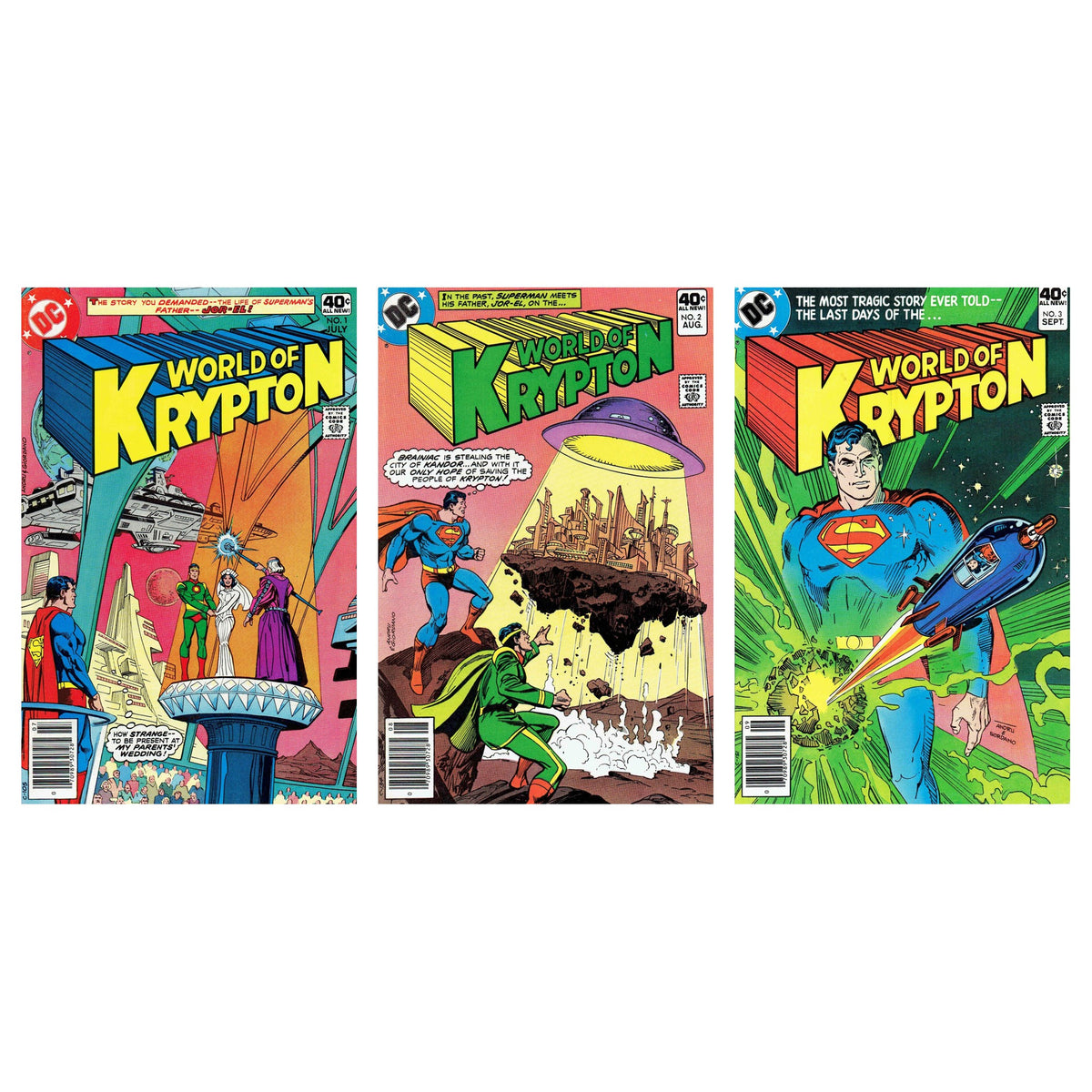
World of Krypton #1-3 (1979) is
a historic three-issue comic book limited series published by DC Comicsfrom July to September 1979. Written by
Paul Kupperberg with uncredited layouts by Alan Kupperberg, interior pencils by
Howard Chaykin, and iconic covers by Ross Andru and Dick Giordano, this series holds a monumental place in comic book history as
the industry's very first comic book limited series/miniseries.
DC Comics created this experimental 3-issue format to solve a major publishing problem: ongoing series were frequently fizzling out within 10 issues, so a self-contained limited run offered a safer, high-impact storytelling alternative.
Plot Overview
-
The Concept: Set during the Bronze Age era of DC continuity, the series moves away from modern Earth to deeply explore the history, culture, and ultimate tragedy of Superman's home planet.
-
Issue #1 ("The Jor-El Story"): The story dives into the early life of Superman’s father, Jor-El. It explores his scientific achievements, his rise within Krypton’s prestigious Science Council, and his romance and eventual marriage to Lara.
-
Issue #2 ("This Planet Is Doomed!"): As Jor-El detects a shift in the planet's core, he discovers a terrifying truth: Krypton is locked into an unstoppable chain reaction that will result in total planetary obliteration. He faces extreme skepticism and mockery from the ruling council when he tries to warn them.
-
Issue #3 ("The Last Days of Krypton"): The final, tragic countdown to destruction. It covers the desperate construction of the prototype rocket, the imprisonment of rogue villains like General Zod and Jax-Ur in the Phantom Zone, and the final moments as Jor-El and Lara send their infant son, Kal-El, safely into the cosmos.
Key Features & Legacy
-
A New Blueprint: By proving that a brief, self-contained story arc could sell incredibly well, World of Krypton fundamentally shifted how the entire comic industry operates, paving the way for every famous miniseries and crossover event that followed.
- Lore Expansion: It heavily fleshed out Kryptonian society, showcasing its utopian technological advancements alongside the strict, bureaucratic hubris that ultimately led to its demise